UROLOGICAL BIOMECHANICS
Incontinence of urine severely affects the quality of life through loss of dignity and loss of independence. Our goal is to enhance patient care through the development of more reliable and effective urinary continence implants.
The process of developing our devices utilizes a comprehensive strategy involving experimental studies, laboratory models, and computer simulations, where each component constantly informs and improves the other components.
Experiments play an important role in our research process, as we have an abundance of information on the properties of human tissues under stretching,
compressing, and inflation processes. These experiments are done on human tissue from donor sources, wherein both AUS and IPP placements are duplicated using physiological conditions in vivo.
Based on the outcomes of the above-mentioned experiments, benchtop models of tissues are created to mimic the anatomical structure of the human body, which consists of such structures as tunica albuginea, corpus cavernosum, inner urethra, corpus spongiosum, and skin. The models are created from biomaterials that are modified to match certain physical properties, such as rigidity, porosity, swelling, viscoelasticity, and saturability.
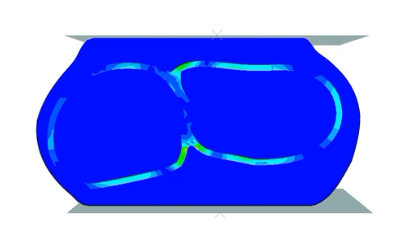
The data obtained experimentally is then used in computational models for analysing the mechanical properties of tissues internally, such as the stress, strains, and contact mechanics. The results from these simulations allow access to information that is not easily measured through experimental techniques, especially within in vivo settings.
This integrated approach allows for the systematic examination of important design variables such as pressure conditions, dimensions, and placement methods, as well as how these factors impact the effectiveness of the devices in use. Together, these approaches ensure that there is an effective and evidence-based process involved in designing and evaluating urological implants, such as AUS and IPP devices, to achieve optimal functionality and durability.
Overall, the aim is to enhance the outcomes of patients suffering from urinary incontinence, with a dedication to developing solutions that can benefit both males and females.